
Check the Rooks County Current Owner Record
Start at the Kansas ORKA Hub, the public entry point the Appraiser links for a Rooks County property search. Screen labels vary by card. Copy spelling, initials, punctuation, and entity suffixes exactly.
| Owner of Record | Name or entity carried on the assessment roll |
|---|---|
| Vesting / Tenancy | How an interest is held, if the live record supplies it |
| Mailing Address | Destination for assessment or tax notices |
| Situs Address | Physical location of the parcel |
| County ID / Legal Description | Keys connecting map, roll, and deed |
| Deed Reference / Sale Date | Transfer clue if displayed |
The owner of record need not live there. Notices may go to a post-office box, a trustee, an agent, a business office, or an address outside Rooks County, so copy the situs and mailing fields separately.
Compare Owner, Mailing, and Situs Fields
The owner line names who the roll lists today. Mailing shows where the tax bill travels. Situs points to the ground itself. A rural parcel can carry a Stockton or Plainville mailing address yet sit outside either city, because ZIP delivery lines are not municipal boundaries.
When fields disagree, the legal description settles it. Town property may use lot and block in a named addition; rural land relies on section-township-range, acreage, or metes and bounds. Give that description plus the county ID when asking the Rooks County Appraiser to confirm a record.
That office reference lives on the Rooks County Appraiser page.
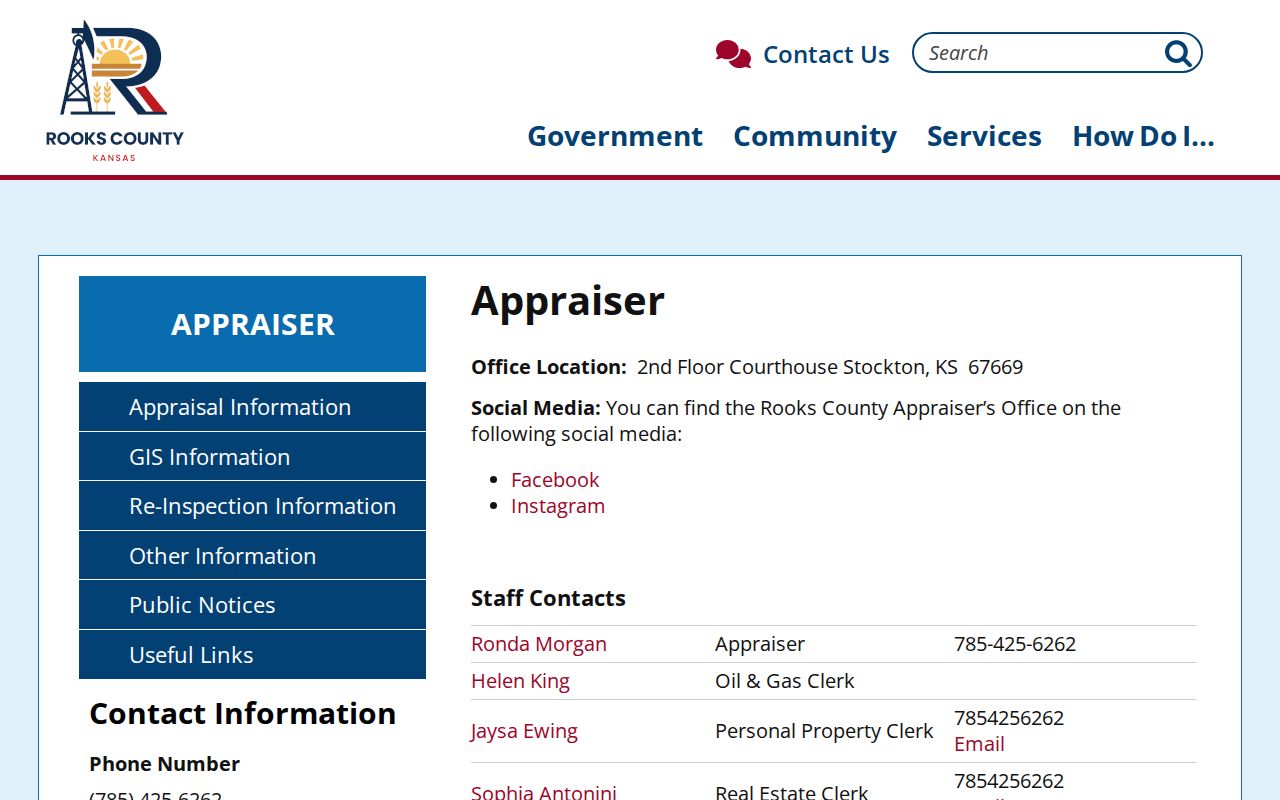
Use that office when the map and newest deed disagree.
Measure How Current the Rooks Owner Record Is
The Appraiser runs annual reinspection and a final review that verifies parcel and improvement data. That cycle is not a transfer clock. No standard refresh lag is published. Compare three dates: assessment year, sale date, recorder date. For a recent closing, call 785-425-6262 and ask whether the transfer posted. Note: the latest recorded deed can be newer than an owner-of-record field that has not yet been refreshed.
Confirm the Current Owner in Rooks County
This check is present-tense only. It compares the roll with the newest transfer, not the historical chain, and Rooks County publishes no online deed index, so counter, phone, and written requests to the Register of Deeds carry the weight.
- Read owner name, county ID, situs, mailing address, and legal description in ORKA.
- Ask the Register of Deeds for the latest deed into that parcel.
- For an LLC, consult the state entity record; for a trust, estate, or life estate, read the vesting and supporting instrument.
- Record any conflict and ask the Appraiser whether its roll needs updating.
- Owner of record
- The party carried on the present assessment roll.
- Vesting
- The language describing how a deed places an interest.
- Registered agent
- A public contact for an entity, not automatically its landowner or occupant.
Verify Entity and Estate Owner Names
The current owner can be a legal entity. Copy LLC, trustee, “Estate of,” and representative wording exactly as written. A Kansas business filing can surface an LLC’s formal name and agent. The deed remains the land-transfer evidence. A probate order may supply authority. An executor’s deed or affidavit then connects that authority to the parcel. Kansas vital certificates are restricted under K.S.A. 65-2422d. A will or death certificate alone never updates land title, so keep vital, court, and recorder evidence distinct.
Resolve a Rooks Current-Owner Mismatch
Send the Appraiser a precise inquiry. List the county ID, legal description, situs, roll name, recording reference and date, and the conflict you spotted. The office sits on the courthouse second floor at 115 N Walnut Street in Stockton, and reinspection material lists rookscoapp@gmail.com. A mismatch is rarely wrongdoing. Timing, abbreviation, representative capacity, or a life estate explains most of them. Ask which source controls the field. Ask when it last refreshed.
Use the Register’s Counter and Copy Channels
Contact the Register of Deeds at 785-425-6291, visit 115 N Walnut Street, or mail PO Box 151, Stockton, KS 67669. Published charges are 50 cents per page in office, $1 per page mailed or emailed, and $3 per index sheet; confirm certified-copy fees.
Ask narrowly for the most recent deed using parcel ID, legal description, situs, approximate date, and current roll name. A full backward chain belongs on the previous owners page.
Keep a Current-Owner Evidence Card
A short evidence card keeps the answer honest. Record the owner name exactly as ORKA or the Appraiser supplies it. Add the assessment year or refresh date. Keep situs and mailing as separate fields, along with the county ID and the complete legal description. Then log the latest deed grantee, deed type, recording date, and book/page or instrument number. Finish with a “verified with” line naming the office and date of contact. Mark anything unconfirmed as unknown.
This card earns its keep on agricultural parcels. Oil-and-gas work makes it sharper still. The Appraiser splits real estate, oil-and-gas, and personal property into separate staff functions. A recorder search may surface leases, easements, reservations, or rights-of-way beside the deed. Those interests never replace the fee owner. Ask which interest each name represents.
Estates deserve two entries. The District Court may identify a representative or order. The recorder’s instrument shows what was filed against the legal description. Split that way, the card states both what is confirmed now and what still pends.
Use the Rooks Owner’s Mailing Clue Lawfully
The owner of record's mailing address on the tax roll can help with a purchase inquiry, an easement question, a boundary dispute, or an estate matter. It proves nothing about where someone actually lives. A mailing address is not occupancy.
Lawful use. Contact through a public mailing address may serve a legitimate property matter. Never use owner information to stalk, harass, intimidate, or harm anyone.